Franky v. King Lasik, Inc., P.S., No. 1:26-mc-00632-DAE, ECF NO. 11, (W.D. Tex. Sept. 11, 2026).
A defendant in a putative TCPA class action was asked in discovery how its marketing texts got sent and to produce the text logs covering the proposed class. Its answer, in substance: we don't send texts, our vendor does, and your questions are better directed to the vendor.
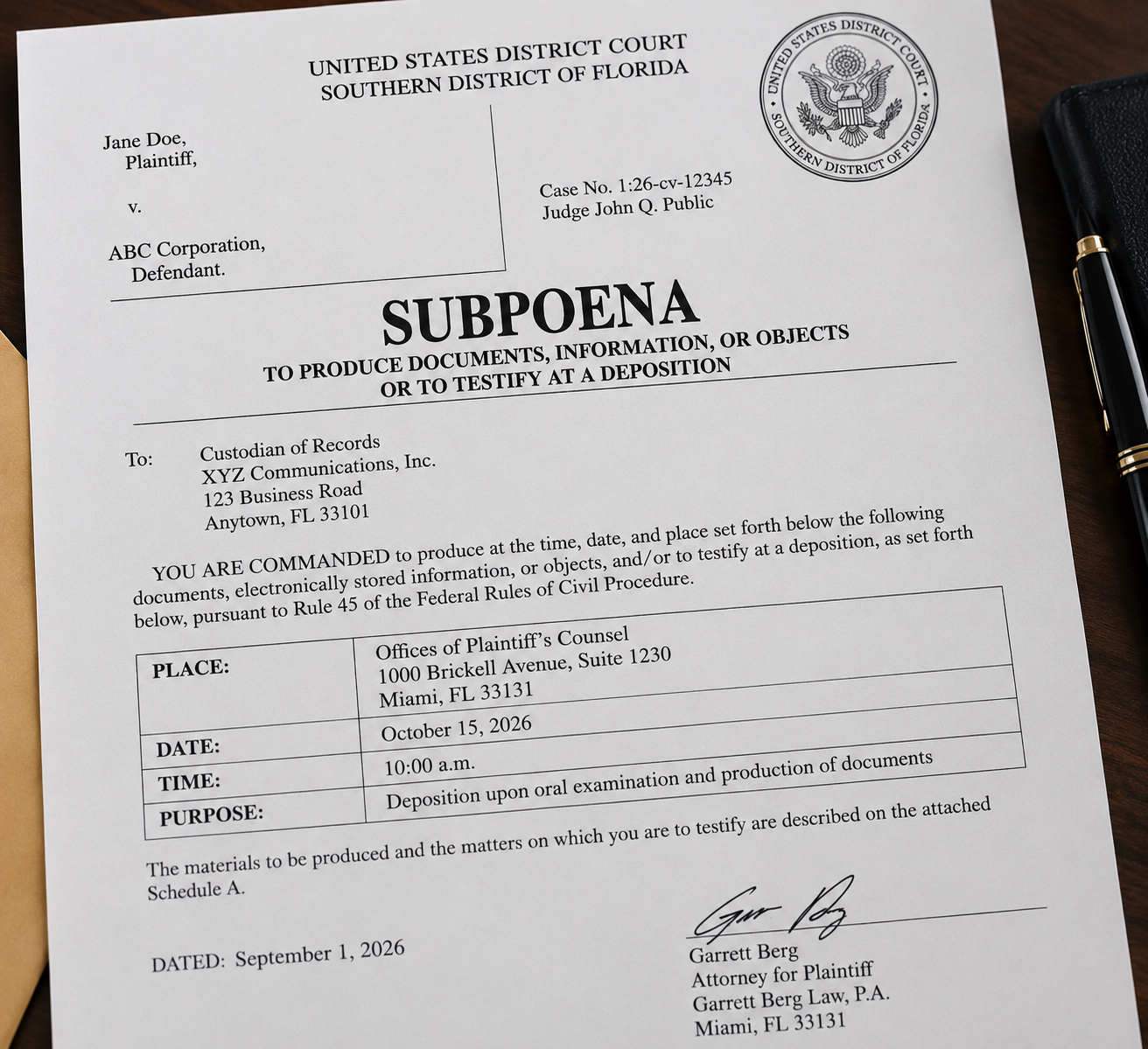
So the plaintiff subpoenaed the vendor--Boost Bariatrics, LLC-- to produce the records. The vendor, a non-party, went to the Western District of Texas to quash the subpoena, offering to produce only the texts related to the named plaintiff herself.
Now instead of resisting, if the vendor had just produced the records it (or its attorneys at Dykema Gossett PLLC) knows it should have, it could have probably saved itself thousands in attorneys fees.
But defense counsel just has to bill someone somehow...
The vendor said it's burden was too high to produce the text logs, claiming it had followed up with "over 20,000 unique leads which has resulted in [it] sending or receiving over 250,000 text messages" on the defendant's behalf. It added that class discovery before certification was premature, and that handing over other people's messages would run afoul of HIPAA and "general privacy rights."
At the hearing, the plaintiff offered a trade: withdraw the subpoena entirely if the vendor produced all texts between it and the defendant's patients, names redacted, with phone numbers, dates and times, inbound-or-outbound direction, and message content, covering November 2024 through the date the complaint was filed, plus a business records declaration.
The Court found the narrowed request highly relevant, necessary, not overbroad, limited to a reasonable nine-month period, and described with particularity. The Court also noted that the vendor offered no evidence that the production of the messages would impose a burden on it.
Generally, the vendor would have had to show how the requested discovery is overbroad, unduly burdensome, or oppressive by submitting affidavits or offering evidence revealing the nature of the burden.
The plaintiff's framing on relevance was essentially adopted by the Court: call and text logs are essential in TCPA class actions because initiating the calls and texts is the violative conduct, the vendor is the only party holding those records, and they matter to certification and to settlement discussions alike. She also pointed the Court to Starling v. KeyCity Capital, LLC for the proposition that absent bifurcation, courts almost universally treat call logs as discoverable.
The HIPAA objection was answered by the protective order already entered in the underlying case.
The vendor's motion to quash the subpoena was denied.
And then, as a cherry on top, the Court left footnote 2. The vendor pointed to Steidinger v. Blackstone Medical Services, 182 F.4th 532 (7th Cir. 2026), and the ask was that the Court follow it and hold that only voice calls, not texts, fall within the private right of action in § 227(c)(5).
In response, the Court noted:
"The Court denies Boost’s request to follow the Seventh Circuit in Steidinger v. Blackstone Med. Servs., 182 F.4th 532, 540 (7th Cir. 2026), by holding that only telephone calls and not text messages fall within the private right of action created by § 227(c)(5). Both this Court and the court hearing the underlying action have held to the contrary."
Fantastic. Two Rulings, one order. One forcing a vendor to turn over text message logs related to a putative class and one confirming texts count as calls under the TCPA.