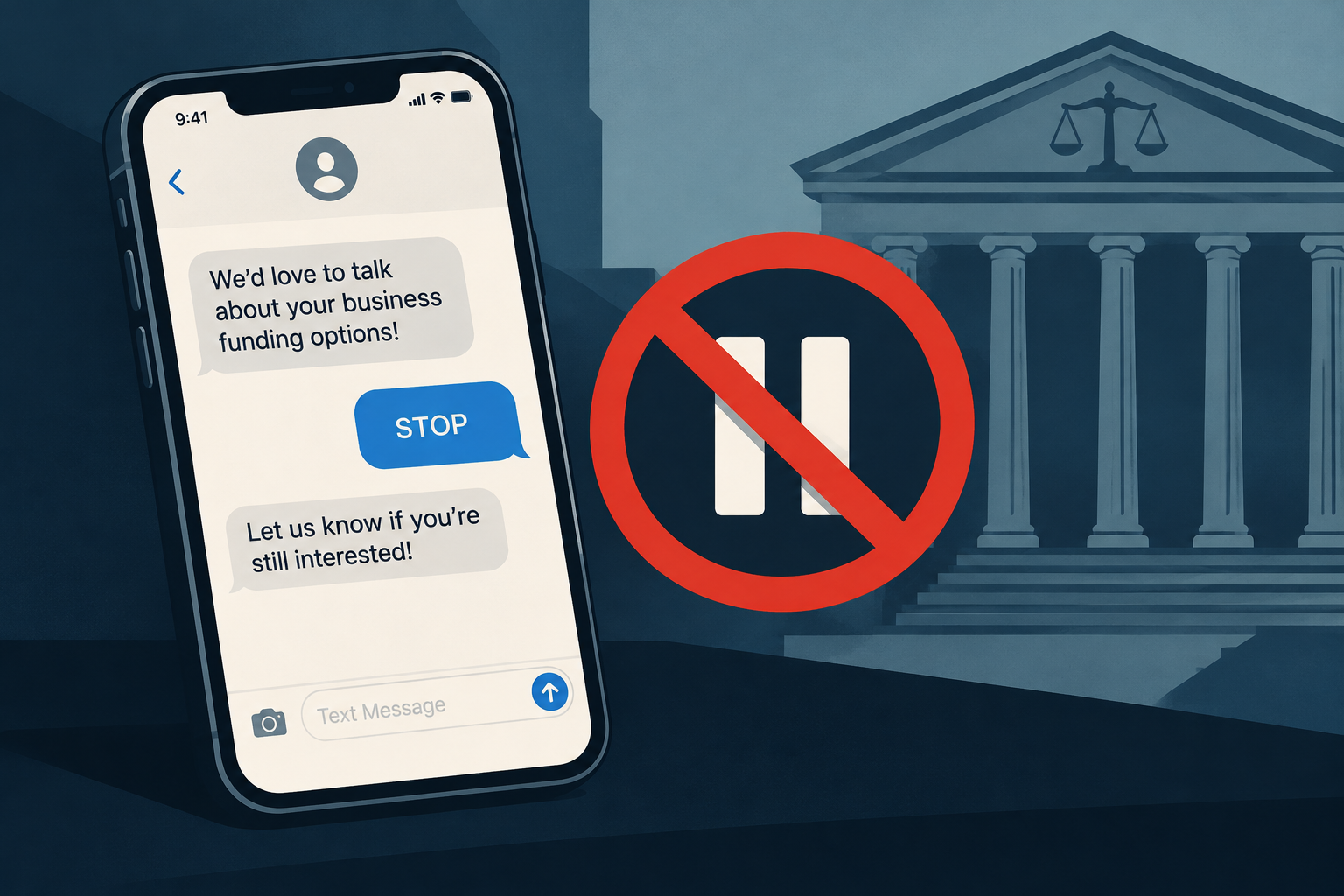

The whole point of a consumer arbitration clause is to make class actions impossible for consumers shielding companies from liability.
Claims get broken into individual pieces, each piece too small to be worth much alone, and the aggregate liability that a class action would produce simply never materializes. That is not a side effect. That is the point.
Frankly this should be illegal, but I digress.
So in August 2023, thousands of plaintiffs gave American Express exactly what it asked for. They filed arbitration demands with the AAA — individually, one plaintiff at a time, precisely as the arb clause required — challenging the "non-discrimination provisions" in the defendant's swipe-fee policies. Plaintiffs had to agree to an arbitration clause in order to accept a credit card from AmEx at all. Fine. They arbitrated.
Then the invoice arrived for AmEX, and the math got interesting. In 5,155 of the demands, the parties disagreed about what AmEx owed AAA in filing fees. So an AAA administrator resolved it: $3,500 per case, with $350 on the plaintiffs and $3,150 on AmEx. Per case. Times 5,155.
The plaintiffs paid their share. AmEx did not.
The administrator warned, repeatedly, over the course of months, that if the fees were not paid by February 26, 2024, "the cases [would] be administratively closed." The administrator informed the parties that the claims were "administratively closed for non-payment." The administrator confirmed the closure "was final" and that the cases were "not subject to reopening" due to AmEx non-payment.
So the plaintiffs filed a class action in the District of Rhode Island. And the defendant — the party that had just declined to fund the individual proceedings it had contractually insisted upon — moved to stay the litigation and compel arbitration, asking to be placed back before the tribunal whose bills it had refused to pay.
The First Circuit was not persuaded. 5-Star General Store v. American Express Co., No. 25-1023 (1st Cir. Aug. 19, 2026). The lower court found a "deliberate choice not to pay arbitration fees" after repeated warnings, and the First Circuit agreed. The defendant did not argue, and could not, that it misunderstood the consequences. Nonpayment "resulted in the foreseeable (and forewarned) outcome of closure."
American Express wanted arbitration to avoid class actions. But they didn't want to pay to arbitrate. So now they face the class action they should have faced to begin with.