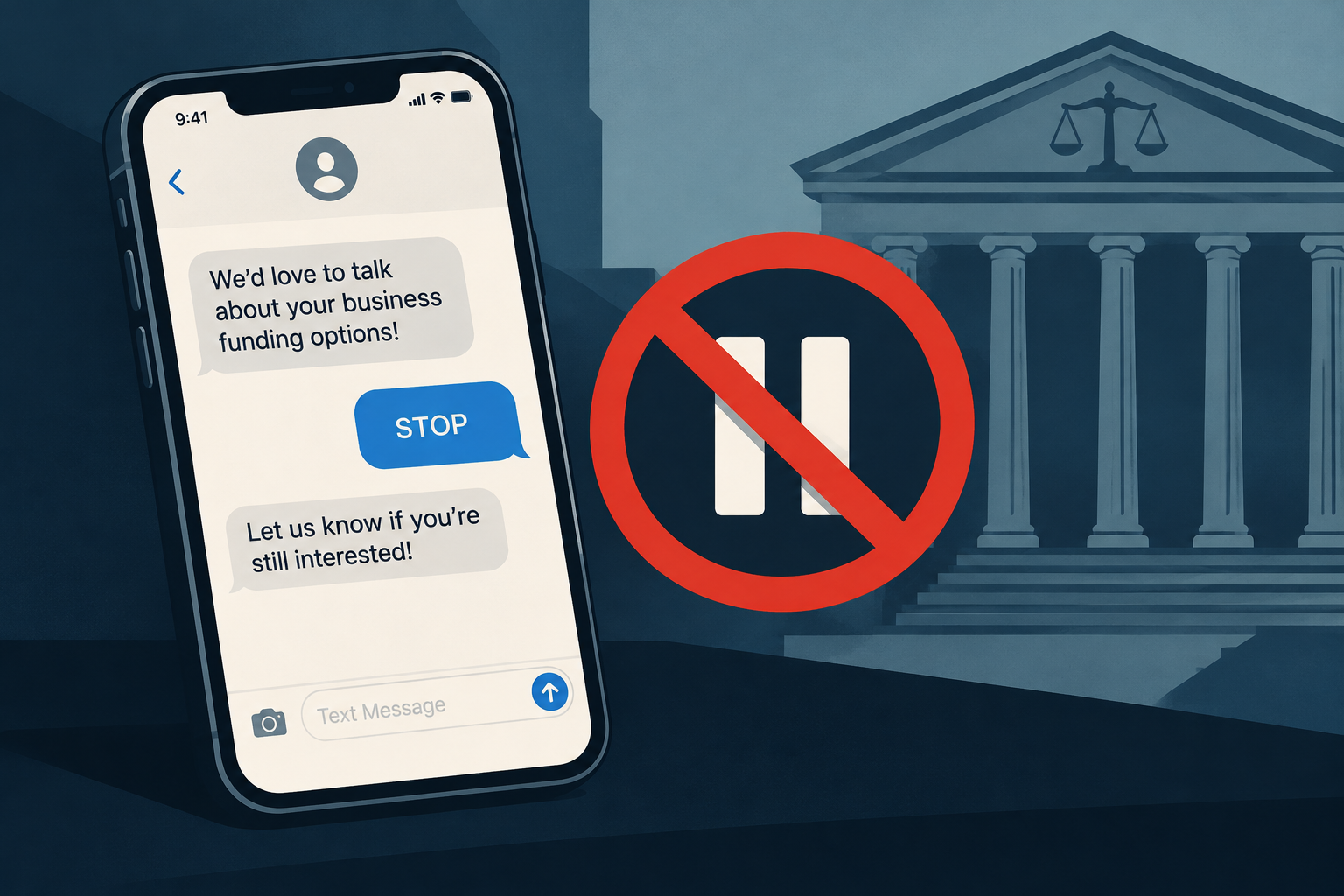

Another prime example of a TCPA defendant waiving its right to move to compel arbitration after spending years litigsating.
In Moore v. Club Exploria, LLC, No. 25-2721 (7th Cir. Aug. 18, 2026), a TCPA defendant, Club Exploria, spent four and a half years litigating a prerecorded-call class action and then, rather late in the proceedings, "remembered" arbitration. The Seventh Circuit was unmoved, and affirmed the district court's denial of Club Exploria's very late motion to compel arbitration.
In 2018, the defendant hired vendors to promote a Florida resort. The vendors bought "leads" — phone numbers harvested from assorted "opt-in" websites — and ran scripted, prerecorded calls to tens of thousands of people. Suit followed in April 2019.
Then came four years of ordinary, merits-focused litigation: affirmative defenses built around consent, two years of class discovery, merits motions, and an opposition to class certification. The defendant lost that fight, and a class of 66,682 was certified. Next came what the district court called "a flurry of motions," none of which mentioned arbitration.
Two months after summary judgment briefing closed, the defendant moved to compel arbitration as to 1,026 class members — a curious number, since it had previously insisted that as much as 70% of the class, roughly 47,000 people, had signed similar agreements. The district court called the motion "out of the blue," found waiver, and granted summary judgment to the class.
Defendant appealed to the 7th Circuit.
The defendant argued its pre-certification conduct was irrelevant because a motion to compel against absent class members would have been futile — they were not yet parties. The court agreed nobody has to file premature motions, then explained why that misses the point. Arbitration agreements with putative class members "should be produced during class-related discovery and in opposition to class certification," because their number and variety bear directly on the Rule 23 analysis. "By not raising arbitration at that stage," the court wrote, "the defendant implies it intends to litigate class claims in court." Asking to reopen discovery afterward "shows a lack of diligence."
On this record, clear-error review was not close. Consent defenses with no mention of arbitration. Two years of discovery developing evidence of consent but not of arbitrability. A certification opposition silent on arbitration. Post-certification motions asking to try the merits. Four and a half years, the court held, "was too long."
The explanation offered was that the defendant had "recently retained new counsel" who reviewed the opt-in forms and concluded arbitration agreements were probably accepted.
The court dispatched that and explained: "a change in counsel late in the game cannot excuse prior counsel's lack of diligence. Otherwise, parties could revive their rights simply by hiring a new lawyer."
The pattern is by now recognizable. It looked much the same in Mason v. Spring EQ, LLC, where a defendant litigated for fifteen months, lost certification, retained new counsel, and then suddently discovered its arbitration clause. The difference here is that the lesson arrived from a court of appeal.