A district court in the Eastern District of Missouri just quietly held that texts qualify as calls under the TCPA do-not-call list protections. The case is Ksiazkiewicz v. Woods Basement Systems, Inc., 2026 U.S. Dist. LEXIS 172031 (E.D. Mo. Aug. 3, 2026), and this is actually a great little order so let's break it down.
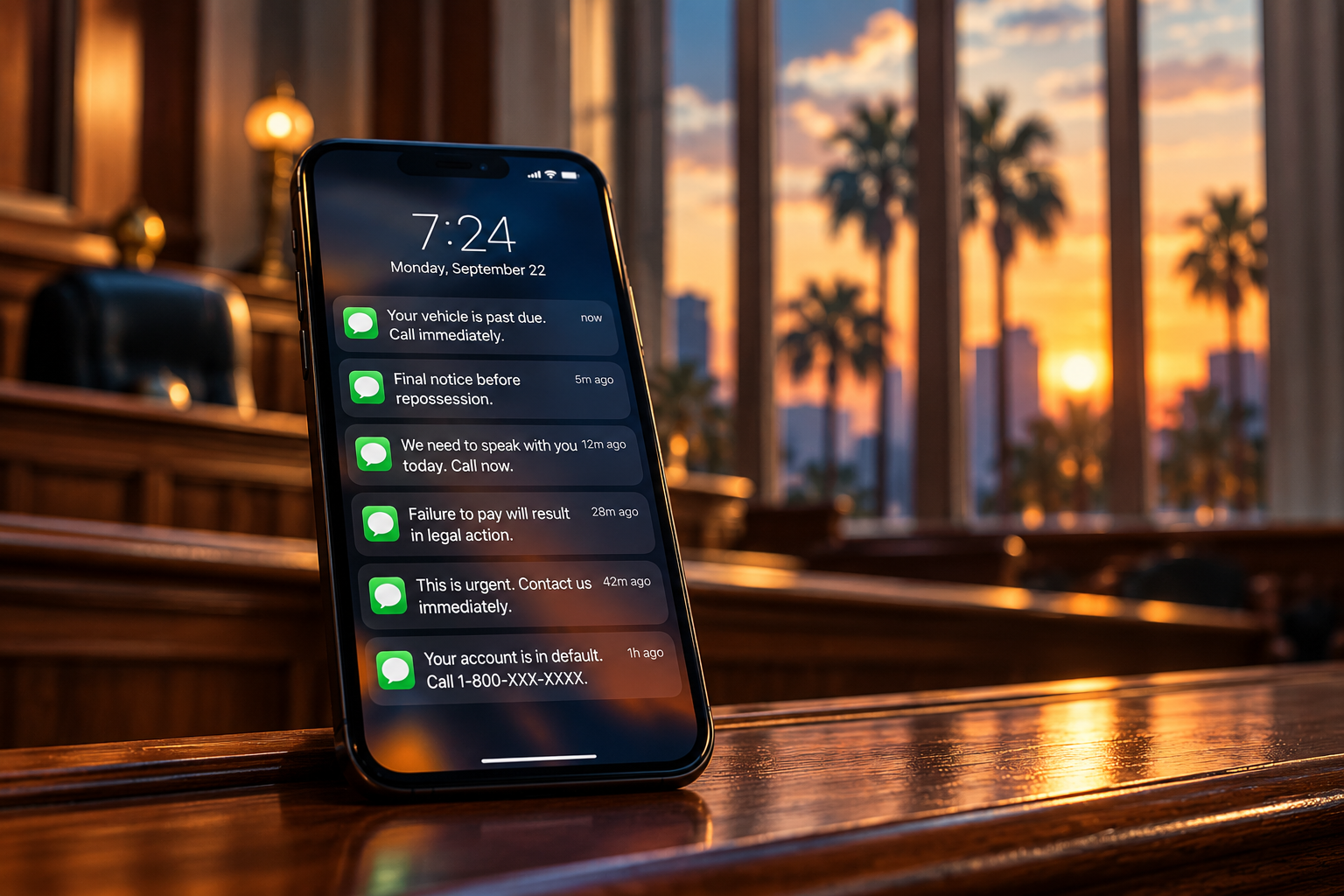
Ask a contractor for one price quote, and you might reasonably expect one price quote. In Ksiazkiewicz v. Woods Basement Systems, Inc., the plaintiff got a good deal more. She reached out for an estimate — bought nothing, gave no permission to be contacted again — and says she then spent the next eight months receiving at least eleven sales calls and thirty-four marketing texts, plenty of them after she told the caller to knock it off. She was on the National Do Not Call Registry the whole time as well.
She sued under two TCPA theories. On a motion to dismiss, the Court granted one and denied the other.
The autodialer claim did not make it. Under Facebook, Inc. v. Duguid, 592 U.S. 395 (2021), and the Eighth Circuit's Beal v. Outfield Brew House, LLC, 29 F.4th 391 (8th Cir. 2022), an autodialer has to "actually generate" the numbers it dials using a random or sequential number generator; a "system which merely stores and dials phone numbers is not an Autodialer."
The plaintiff had pled plenty that looked automated — rotating or spoofed caller ID, click-and-pause delays before a live agent came on, the same message on repeat, months of contact. The Court called those allegations "consistent with automatic dialing," then explained why that isn't the finish line: she had to allege a system that generates the numbers, "not just a system that automatically dials phone numbers it already has." She hadn't, so the count fell.
The Court's own list of what was missing doubles as a hint at what a surviving pleading looks like.
To reach the number-generator prong head-on, a complaint has to allege facts suggesting the system produced the numbers, not just dialed a list — think calls landing on numbers that were never handed out, contact arriving at several of a person's lines in tidy numerical sequence, wrong-number and misdirected calls, or a dialing pattern that marches through blocks of numbers in order. That is a tall order here, of course, because the plaintiff had personally given the caller her number for the estimate; when the caller already has your number, "they generated it at random" is a hard story to tell.
Which is why the more promising path was the one the Court flagged and the plaintiff barely used. Section 227(b)(1)(A) independently bars artificial or prerecorded-voice calls, with no autodialer required at all. The plaintiff raised it — but only as "a wholly conclusory, threadbare recital of an element," with no supporting facts at all. A little detail would have gone a long way: a flat, synthetic-sounding voice; a pause and dead air before a recorded pitch kicked in; the identical recording, word for word, across call after call; a greeting that played on regardless of what she said; an "if you'd like to speak to a representative, press one" menu. Facts like those plead a prerecorded or artificial voice on their own terms and don't need a number generator anywhere in sight. On this record the theory was there for the taking; it just arrived empty-handed.
The do-not-call claim is where the plaintiff-side reader gets to smile. The caller's defense was the familiar one: she called us first for an estimate, so she invited the contact and we had an established business relationship. The Court wasn't buying it, and the reason is a regulation defense lawyers would rather you forget.:
"A "seller-specific do-not-call request . . . terminates an established business relationship," 47 C.F.R. § 64.1200(f)(5)(i), and a "do-not-call request" is simply "a request . . . not to receive calls." So even if that lone estimate created a relationship, her repeated demands to stop ended it. She didn't have to pin down the exact minute it happened, either; the Court noted it was enough to allege contact after the relationship was over.
And then another part to this order worth celebrating on its own:
The defendant's backup move was the trendy argument these days: sure, the do-not-call rules cover calls, but a text isn't a call, so those thirty-four marketing texts should drop out. Callers have been trying to slither through that gap lately. The Court closed it flatly with the following quote:
"Not true. The subsection immediately following these rules expressly states that they "are applicable to any person or entity making telephone solicitations or telemarketing calls or text messages . . ." 47 C.F.R. § 64.1200(e).
Bravo.
It really is (and should always be) that simple. Add this one to the vault of good orders post-Mclaughlin.
Great dub here for consumers!